
Guide
How to Set a Grow Light Schedule: 18/6 and 12/12
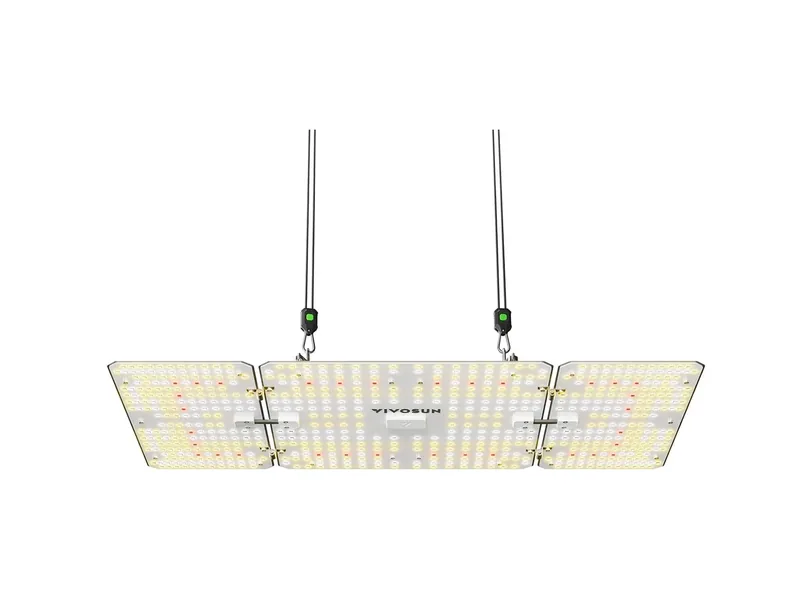
An 18/6 schedule means 18 hours of light and 6 hours of dark. A 12/12 schedule means 12 hours on and 12 hours off. Growers commonly use 18/6 while plants are vegetative and switch to 12/12 when they want a flowering photoperiod. Those two timings are general horticulture practice, not a timer program printed on the LumaLight 200W LED Grow Light itself. This guide shows how to apply them with the light you actually have.
What the 200W panel gives you
The LumaLight 200W (model VSL-LL200) is a 200 watt full-spectrum LED with 672 diodes, mixing 3000K and 5000K white with 660 nm red and 730 nm far-red. VIVOSUN makes it for 2x4 and 3x3 grow tents and arranges the diodes so intensity stays more even from the center of the coverage area to the edges. A 4-level dimming knob sets output from 25% to 100%, which helps with young plants that need gentler light.
The panel itself does not include a built-in clock. App scheduling and dimming need a VIVOSUN GrowHub, sold separately. Pair the hub later if you want the lights to switch themselves; until then you use the knob plus a separate timer or a daily habit. VIVOSUN rates the fixture IP65 against water and dust, quotes a Q90 lifespan of up to 36,000 hours, and lists the panel at 23.5 × 11.8 × 2.95 in (597 × 300 × 75 mm) and 9 lb (4.1 kg). Rope hangers come in the box. At that weight, use secure hanging points.
This size is not meant to cover a 4x4 as the main light. For that footprint, VIVOSUN points to a larger LumaLight in the 4x4 kit. Side-by-side wattage notes are in LumaLight 200W vs 400W. Tent dimensions live in VIVOSUN grow tent sizes. Hanging height for this 200W panel is a separate decision, covered in LumaLight 200W hanging height.
Why growers use 18/6 and 12/12
Photoperiod is the daily pattern of light and dark. Many seed-grown plants stay vegetative under a long day and begin to flower when nights get longer. Eighteen hours on and six off is a common vegetative pattern; twelve on and twelve off is a common flowering pattern for plants that need a longer uninterrupted night.
Seedlings often want the same long-day clock as vegetative plants, but at lower intensity. That is where the 25% to 100% knob matters more than a third schedule name. The LumaLight’s full-spectrum mix is meant to cover plants from seedling to harvest with one panel, so you are changing time and dimming, not swapping bulbs.
Keep the dark period actually dark. A grow tent that leaks hallway light during the 12-hour night can confuse a photoperiod-sensitive plant. That is a room-setup issue, not a LumaLight defect. If you are still sealing a tent, treat light leaks as part of the schedule, not as an afterthought.
Setting 18/6 without a GrowHub
- Hang the panel securely in the 2x4 or 3x3 tent you matched it to, using the included rope hangers.
- Set the dimming knob to a low step (25% or the next step up) for seedlings, then raise output as plants grow. The product page does not publish a recommended knob position for each growth stage, so change one step at a time and watch the leaves rather than jumping straight to 100%.
- Turn the light on at the same time each morning and off 18 hours later. A simple outlet timer is general practice when a fixture has no clock. The LumaLight page does not bundle a timer.
- Leave the six-hour dark period consistent. Moving it by several hours every few days is harder on plants than a slightly earlier or later routine you can keep.
- When you water, remember the fixture is IP65-rated, which helps in a humid tent; you still should not spray the diodes at close range as a cleaning method.
Write the on and off times on the tent door so no one switches the light off in the middle of an 18-hour day.
Switching to 12/12
Pick a flip day and change only the clock at first, not every other variable on the same morning. Set the timer (or your routine) to 12 hours on and 12 hours off. Keep the dark period uninterrupted. You can raise or lower the dimming knob if the canopy now fills more of the 2x4 or 3x3 footprint, again one step at a time.
This panel does not have a separate spectrum mode to switch. The 3000K and 5000K white diodes plus 660 nm red and 730 nm far-red stay in the fixture for the whole cycle. You are controlling hours and intensity, not flipping a veg/flower switch on the bar.
If you later add a GrowHub, move the same 18/6 or 12/12 times into the app instead of using the outlet timer. Setup notes for that controller are in VIVOSUN GrowHub A22 setup. App dimming then sits beside the knob, which is useful if you want scheduled intensity changes without visiting the tent twice a day.
A simple weekly check
Once a week, confirm the on/off times did not drift and that plants at the edges look as well lit as the center. If you have outgrown a 2x4 or 3x3, look at a 4x4 layout such as the S448 4x4 Grow Tent with a larger light. The wider gear map is in the VIVOSUN review.
Set the hours first (18/6 or 12/12), then the dimming step, then keep both steady. That is the whole schedule on a LumaLight 200W: a full-spectrum 200 W panel, a 25–100% knob, and either a timer or a GrowHub to make the clock reliable.