
Guide
Grow Tent Temperature: Day, Night and Fixing Heat
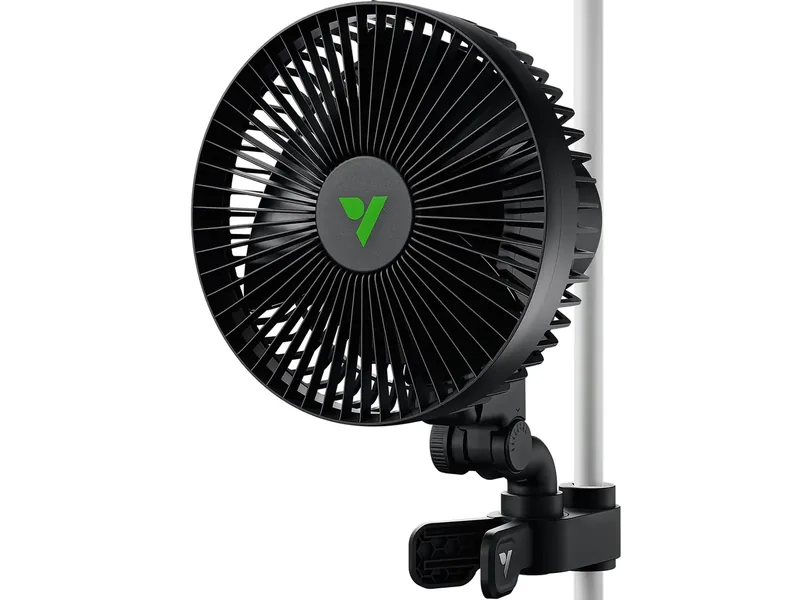
A sealed grow tent can climb past 80°F quickly once the light is on, according to VIVOSUN’s ventilation guide. Treat that as the warning line for heat, and keep the tent below 95°F while a LumaLight 200W LED Grow Light is running, which is the working limit in that light’s manual. The exhaust fan should run the whole time the light is on. A clip fan such as the AeroWave A6 6" Clip Fan is for the still air between leaves, not for dumping heat out of the tent.
Why the tent runs hotter than the room
Grow lights add both convective and radiant heat. In a closed box that heat has nowhere to go, so the air at the canopy can rise well above the room. VIVOSUN’s guide also notes that plants release moisture, which is a humidity problem, and that a stagnant tent holds both heat and damp air in the same pockets. A thermometer and hygrometer at canopy height, not only on the tent wall, keep you honest. Guessing from how the room feels is not enough.
The S448 4x4 Grow Tent is 48 × 48 × 80 in (1219 × 1219 × 2032 mm), about 106 cubic feet inside. At 80 in tall, measure the ceiling and leave room for ducting above the tent. The shell has a lower window that helps release heat, plus a covered observation window so you can check the plants without opening a door. Multiple duct ports and cable openings are there for an inline fan, and the top hanging bars carry the light and the exhaust gear.
There is no crop-by-crop temperature chart in this article. Use the published equipment limits, a canopy reading, and the ventilation sequence VIVOSUN already publishes.
Day: lights on, exhaust on
VIVOSUN’s ventilation guide is direct: run the exhaust fan continuously while the grow lights are on. That is the main heat control. An inline fan and carbon filter pull warm air out of the top of the tent and make room for cooler room air to enter. The clip fan does not replace that path. The A6 is a 6 in (152 mm) clip-on circulation fan: two speeds, 1400 and 2200 RPM, rated as quiet as 38 dB, with 90° automatic horizontal oscillation and 120° manual vertical tilt.
Aim the A6 across or under the canopy so air does not sit still around leaves. The lever-lock clamp is made for round poles, square frames, and flat surfaces, with rubber padding so it does not slip or scratch the frame. On an S448, that usually means a frame pole at canopy height, not a clip on the light itself.
If the tent is still climbing past 80°F with the exhaust running:
- Confirm the inline fan is actually exhausting, with the filter first in line and the duct run short and straight. VIVOSUN fan and filter setup is the build order.
- Open or use the lower heat-release window on the S448 if the tent is running hotter than the room and the door has been sealed tight.
- Check hanging height and dimmer on the light. The LumaLight 200W has a 4-level dimmer from 25% to 100%, and the hanging guide starts with distance plus dimmer rather than lowering the panel onto the canopy. See LumaLight 200W hanging height.
- Feel the room. A hot attic or a tent pushed against a heat register will beat a correctly aimed clip fan.
Stay below the LumaLight’s 95°F working limit while the light runs. Ventilation is how VIVOSUN says to do that, not a second climate machine used as a heater or an air conditioner.
Night: step the fan down after lights off
When the light goes out, heat load drops. VIVOSUN’s ventilation guide says to start reducing fan speed about 20 minutes after lights-off, then step it down over about three hours until an inline fan is off, or an oscillating fan is left on low. That sequence is for the dark cycle, not a reason to shut the exhaust the moment the light clicks off.
Seedlings are called out separately in that same guide: they need gentle, all-day airflow. Vegetative and flowering plants are described as needing maximum airflow during lights-on. Use the A6’s lower 1400 RPM speed when you want movement without a hard blast on small plants, and keep the exhaust plan you already built for the larger plants.
Humidity still matters at night, and it is a different job from dumping heat. The AeroDrain D12 is sized for moisture, up to 12 liters a day, for tents up to 5×5 ft as VIVOSUN recommends it. Setup is in how to set up the AeroDrain D12. Read the canopy temperature after you turn the dehumidifier on; it is not a cooler.
A short heat checklist
- Canopy thermometer in place, not only a probe on the wall.
- Exhaust fan running for the whole lights-on period.
- A6 (or another clip fan) aimed across or under the canopy, clamp tight on a frame pole.
- Tent below 95°F while the LumaLight is on; treat a climb past 80°F as a reason to check exhaust and light height.
- After lights-off, wait about 20 minutes, then step the fan down over about three hours as VIVOSUN describes.
- Ceiling clearance checked for an 80 in (2032 mm) tent plus ducting.
For a full equipment map, use the VIVOSUN review.
Bottom line
Heat in a tent comes from the light and has to leave through exhaust, not through a clip fan alone. VIVOSUN warns that a sealed tent can climb past 80°F quickly, and the LumaLight 200W must stay under 95°F while it runs. Keep the inline fan on for the lights-on period, use the AeroWave A6 to move air at the canopy, and step the fan down after lights-off on the published schedule.